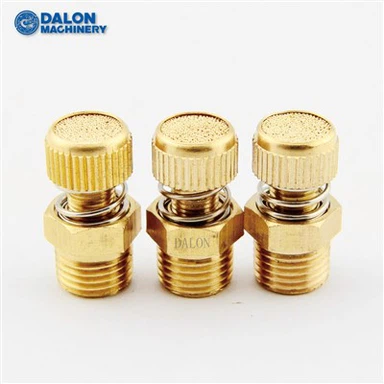
Sintered Bronze Vent Filter: When to Use It in Industrial Systems
Jul 29, 2026
When to Use a Sintered Bronze Vent Filter
A sintered bronze vent filter is often considered when equipment needs to breathe, equalize pressure, or protect an opening from particles while keeping a compact and rigid porous metal structure.
This article explains when a sintered bronze vent filter is a practical choice, when another material or geometry may be better, how to evaluate pore size and pressure drop, and how BRONZE FILTER CAP 4.34X7.137X19.05 35MICRON fits this topic for compact OEM venting and protection roles.
What a Sintered Bronze Vent Filter Does
A sintered bronze vent filter is a porous metal component made from bronze powder that is compacted and sintered into a rigid structure.
- allow pressure equalization
- protect an opening from dust or coarse particles
- reduce direct exposure of a port, cavity, or small passage
- support controlled airflow through a compact assembly
- provide a rigid porous insert for repeatable OEM installation
- help manage venting in pneumatic, mechanical, or equipment protection roles
When a Sintered Bronze Vent Filter Is a Good Fit
A sintered bronze vent filter may be a practical choice when the application needs a compact porous metal element rather than a soft, fibrous, or unsupported medium.
It is commonly worth evaluating when the project requires:
- a rigid self-supporting vent element
- defined pore structure for controlled airflow
- compact cap, plug, bushing, or insert geometry
- repeatable fit in an OEM housing
- moderate particle protection at a vent opening
- possible cleaning in suitable applications
- better mechanical stability than some soft filter media
When a Vent Filter May Not Be the Right Choice
A sintered bronze vent filter is not the correct answer for every opening.
Another filter type or material may be better when:
- the system requires very low pressure drop through a small vent area
- contamination is sticky, oily, or likely to block the pores quickly
- the medium is not compatible with bronze
- cleaning access is poor and replacement would be difficult
- stainless steel provides a better risk balance
- porous plastic provides enough performance at lower total cost
- a membrane or mesh structure is more appropriate for the function
Airflow and Pressure Drop Are the Core Venting Questions
For a vent filter, pressure drop is often more important than buyers first expect.
Important airflow questions include:
- How much air must pass through the vent during normal operation?
- Are there fast pressure changes during startup, shutdown, filling, draining, or actuation?
- What pressure drop is acceptable when the filter is clean?
- What pressure drop is acceptable after contamination loading?
- Will moisture, oil mist, or dust reduce airflow over time?
Pore Size Selection for Vent Filters
Pore size affects both airflow and particle control.
- Is the main goal pressure equalization?
- Is the filter protecting a small passage from visible dust or debris?
- Is it used near pneumatic exhaust or air movement?
- Is it exposed to oil mist, moisture, or sticky contamination?
- Does the downstream component require fine protection?
Why Geometry Matters in a Vent Filter
Geometry is often as important as pore size.
Geometry affects:
- active porous area
- flow direction
- installation consistency
- retention in the housing
- cleaning access
- repeat-order dimensional stability
- risk of bypass around the filter
Material Compatibility and Operating Environment
Bronze can be a practical material for many industrial venting roles, but compatibility should still be confirmed.
Buyers should review:
- the gas or fluid near the vent
- temperature at the filter location
- moisture or condensation exposure
- oil mist or sticky deposits
- cleaning chemicals
- corrosion risk
- housing and seal materials
Cleanability, Replacement Frequency, and Downtime
One reason buyers consider sintered bronze vent filters is that they may be cleaned in suitable applications.
Cleaning may add value when:
- contamination is dry or loosely held
- the vent filter can be removed or reached easily
- cleaning restores acceptable airflow
- maintenance labor is reasonable
- replacement parts are inconvenient to change frequently
Cleaning may add less value when:
- contamination is sticky, baked-on, or deeply embedded
- the filter is pressed into a difficult-to-access location
- cleaning does not reduce pressure drop enough
- replacement is faster and more predictable
- the equipment must avoid long service interruptions
How Tooling Charge and Repeat Orders Affect Total Cost
Vent filters are often small, but custom geometry can matter a great deal.
DALON policy for standard and custom filter projects is as follows:
- Standard filter products generally have no fixed specific MOQ.
- Custom filter products may require a one-time tooling charge for the first order.
- Repeat orders of the same specification do not require tooling charge again.
- Later mold maintenance, repair, and renewal costs are borne by DALON.
- First custom order including samples is usually around 45 days.
- Repeat orders are generally within 35 days, subject to actual project confirmation.
How BRONZE FILTER CAP 4.34X7.137X19.05 35MICRON Fits This Topic
BRONZE FILTER CAP 4.34X7.137X19.05 35MICRON is relevant to sintered bronze vent filter selection because it represents a compact cap-style porous bronze filter with a 35 micron pore rating.
Common Applications for Sintered Bronze Vent Filters
Pneumatic Vent Ports
Vent filters can help protect pneumatic ports from particles while allowing air movement.
Equipment Breathers
Breathers allow pressure equalization in housings, reservoirs, or enclosed components.
Valve and Actuator Protection
Small valves and actuators may require vent protection to reduce particle ingress.
Sensor or Instrument Port Protection
Some industrial instruments need a protected air or gas path.
Selected Fuel-Related or Lubricant-Related Protection Roles
In selected fuel-related or lubricant-related protection roles, a bronze vent-style filter may be used only after compatibility, pressure drop, contamination, and cleaning requirements are reviewed.
Buyer Checklist for Vent Filter Selection
Function
- Is the filter used for breathing, venting, exhaust protection, or particle control?
- Does the system need rapid pressure equalization?
- Is the vent exposed to dust, oil mist, moisture, or debris?
Performance
- What airflow is required?
- What pressure drop is acceptable when clean?
- What pressure drop is acceptable after contamination loading?
- What pore size is appropriate for the contamination risk?
Design
- What installation space is available?
- Will a cap, plug, disc, tube, or bushing shape fit best?
- Will the housing block part of the porous surface?
- Can bypass occur around the filter?
Commercial Planning
- Is a standard product available?
- Is custom tooling required?
- Will repeat orders use the same specification?
- How long is acceptable for sample approval and repeat supply?
Common Mistakes When Choosing Vent Filters
Mistake 1: Selecting by Size Alone
A vent filter may fit the available space but still restrict airflow or provide insufficient protection.
Mistake 2: Choosing the Finest Pore Rating by Default
Finer filtration may improve particle control, but it can increase pressure drop and reduce breathing speed.
Mistake 3: Ignoring Loaded Performance
A clean vent filter may perform well at first, then become restrictive as dust, oil mist, or residue loads the pores.
Mistake 4: Overestimating Cleanability
Cleaning can help in suitable applications, but not every contaminant is easy to remove.
Mistake 5: Forgetting Repeat-Order Stability
For OEM designs, vent filter dimensions, pore rating, and geometry should remain consistent across repeat orders.
FAQ
When should I use a sintered bronze vent filter?
Use a sintered bronze vent filter when the application needs a compact rigid porous metal element for breathing, pressure equalization, or vent opening protection, and when bronze is compatible with the operating environment.
How do I choose the pore size for a vent filter?
Pore size should be chosen by balancing particle control and airflow.
Does a vent filter affect pressure drop?
Yes. Every vent filter creates some resistance. The key is to keep pressure drop acceptable for the required airflow in both clean and loaded conditions.
Can sintered bronze vent filters be cleaned?
They may be cleaned in suitable applications, but the result depends on the contaminant, cleaning method, geometry, and access.
Is there a fixed MOQ for standard sintered bronze filters?
Standard filter products generally have no fixed specific MOQ.
Do custom vent filters require a tooling charge?
Custom filter products may require a one-time tooling charge for the first order.
How long does a first custom order usually take?
First custom order including samples is usually around 45 days.
When may stainless steel be more cost-effective than bronze?
Stainless steel may be more cost-effective when corrosion risk, cleaning chemistry, mechanical demand, or operating severity makes bronze less suitable.
How does BRONZE FILTER CAP 4.34X7.137X19.05 35MICRON fit vent filter selection?
It is a compact cap-style porous bronze filter with a 35 micron rating, making it relevant where a small vent path needs defined geometry and particle control.
Conclusion
A sintered bronze vent filter is useful when a system needs controlled breathing, pressure equalization, or vent opening protection in a compact rigid porous metal form.
For industrial buyers, the best selection is practical rather than generic.